KidsTravelLab
The First Two Weeks on a Balance Bike
A week-by-week look at what a child actually does with a balance bike at first, and which adult reactions help versus which ones reset progress.
By KidsTravelLab Editorial Team ·
Short answer: A week-by-week look at what a child actually does with a balance bike at first, and which adult reactions help versus which ones reset progress.
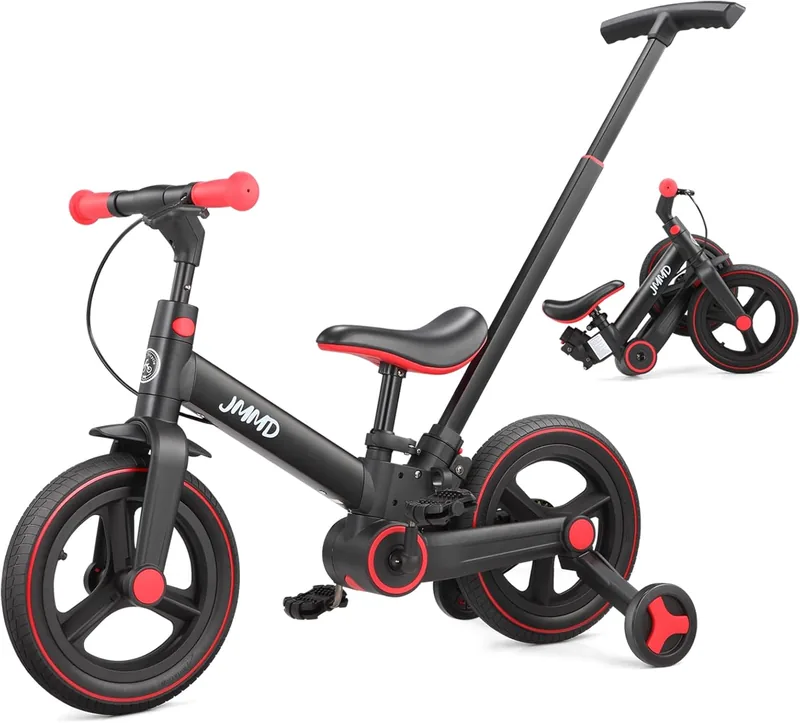
The first two weeks are not a training programme. They are a sequence of small refusals, and the adult's job is to not treat a refusal as a setback.
Week one: the bike is furniture
Expect the bike to be sat on, walked around, and pushed backwards more than it is ridden forwards. This is not a delay. A child who has straddled the bike twenty times in a hallway has already learned the most important thing: that it stays upright between their legs when they are not moving.
Two adult habits matter here. Do not lift the child onto the bike, and do not hold the handlebars. Both remove the exact feedback the child is collecting. Standing beside the bike is enough.
The other thing week one settles is the seat height. A bike set too high forces tip-toe contact and reads as unstable before the child has moved. Balance bike size chart has the flat-foot test; re-check it at the end of week one, because a child who has stopped resisting the bike will now stand differently on it.
Week two: the glide appears, briefly
Somewhere in the second week most children produce a short glide — two or three metres with both feet off the ground — and then immediately stop doing it. That stop is normal and worth naming, because it is the moment most adults over-correct.
The glide is not a skill being performed. It is a balance moment that happened because the child forgot to be careful. Praise aimed at the glide ("do that again") makes it a performance, and a performance is something to fail at. Praise aimed at the attempt ("you went a long way") leaves it as play.
What actually slows progress
Three things, all of them adult-side:
The first is a schedule. Balance bikes do not respond to drills; they respond to being the thing the child chooses.
The second is a running adult. A parent jogging alongside signals that a catch is coming, and a child who expects a catch will not commit weight forward. Walk behind instead.
The third is a bike that changed height mid-week. Any adjustment resets the body's sense of where the ground is. Set it once, then leave it.
What the two weeks are actually for
They prove the bike is the right size and the child is willing to sit on it. Both are prerequisites, neither is skill. Actual gliding builds over months, and where to ride a balance bike is the next decision because terrain changes how fast that happens.
If the child is still refusing the bike entirely at two weeks, the useful question is not about technique. Check the seat height again, then check whether the bike is heavier than the child can manage — balance bike weight covers the ratio that matters.
Extension reading
Related Reviews
Products Mentioned in This Guide
- Graco Extend2Fit Convertible Car Seat, Rear and Forward Facing Car Seat with Adjustable Extension Panel for Extra Legroom, GrSource-based score, full specs & safety checklist for the Graco Extend2Fit Convertible Car Seat, Rear and Forward Facing Car Seat with Adjustable Extension Panel for Extra Legroom, Gr.
- JOYSTAR Pluto 12 14 16 18 20 Inch Kids Bike with Light Up Training Wheels, Kids' Bicycle for Boys Girls Age 3-12 Years, Children Bikes, Multiple ColorsSource-based score, full specs & safety checklist for the JOYSTAR Pluto 12 14 16 18 20 Inch Kids Bike with Light Up Training Wheels, Kids' Bicycle for Boys Girls Age 3-12 Years, Children Bikes, Multiple Colors.
- JOYSTAR Angel Girls Bike for Toddlers and Kids Ages 2-13 Years Old, 12 14 16 18 20 Inch Kids Bike with Training Wheels & Basket, 20 24 Inch Girls Bicycle with Handbrake & KickstandSource-based score, full specs & safety checklist for the JOYSTAR Angel Girls Bike for Toddlers and Kids Ages 2-13 Years Old, 12 14 16 18 20 Inch Kids Bike with Training Wheels & Basket, 20 24 Inch Girls Bicycle with Handbrake & Kickstand.
Balance bike reference pages
- Balance bike size chartSeat height, wheel diameter and inseam fit, measured per model.
- What buyers sayWhat the buyer-sentiment summaries mention, where they hedge, and what they cannot tell you.
- Which models fit at each ageEach maker's age range, where coverage thins out, and how to turn a birthday into a fit check.
- Stable track balance bikeWheel spacing, steering limiters and the four-wheel trade-off — published by one in thirteen.
- Weight and buildBike weight against child weight, with frame and tire material.
- Safety standards referenceWhat EN 71, ASTM F963 and CPSC actually require of a balance bike.
- Balance bike recall recordCPSC and EU Safety Gate alerts with dates, hazards and remedies.
- Budget & value balance bikeWhat each price tier buys, the frame, tire and weight trade-offs, and the checks that separate a cheap bike worth keeping.
Continue browsing the full guide library.